Help corporate buyers decide
HR cannot shortlist what your website does not explain.
Corporate buyers, human resources (HR) and learning and development (L&D) teams need clear programme information before they enquire. These questions help them evaluate corporate training providers in Malaysia—and show what your website and systems need to answer.
TrainFoundry builds the pages and workflows below using your approved information. Your business supplies the training expertise, programme details and evidence.
How do we choose a corporate training provider in Malaysia?
Start with the work employees need to perform better, the target group and the evidence you will use to judge progress. Compare providers on relevant trainer experience, programme fit, practice activities, delivery arrangements and follow-up. Ask for a specific outline and verifiable references rather than choosing on a course title alone.
What we build: programme pages and enquiry forms that capture the buyer’s business problem, participants and desired outcomes. CIPD’s learning needs guidance explains how to connect learning needs with organisational priorities.
How can HR check a trainer’s experience and suitability?
Request the profile of the trainer who will deliver the programme, relevant industry experience, sample activities and permission to verify client references. Confirm delivery language, availability and what happens if a substitute trainer is needed. Qualifications and client logos alone do not show that a trainer fits your team’s needs.
What we build: trainer profile pages for a trainer–provider, or an external trainer directory and assignment records for an agency. You supply and verify credentials and references.
Can a training provider customise an in-house programme for our team?
Ask which parts will change: objectives, industry examples, exercises, duration, delivery language or assessment. Share the team’s roles and performance gaps, then agree the revised outline, who approves it and whether customisation affects the fee. A generic course with your company name added is not evidence of a tailored programme.
What we build: client-brief forms, proposal templates and approval steps that preserve the agreed scope from sales to delivery.
What should a corporate training quotation include?
Compare quotes against the same scope: trainer, objectives, duration, participant numbers, delivery format, materials, assessments and follow-up. Ask which venue, travel, tax, platform and cancellation charges apply, and what is excluded. A useful quote makes the total cost and responsibilities clear.
What we build: quotation templates, costing fields and approval workflows. Your team sets prices and approves the final quote.
How do we check whether a course is HRD Corp claimable?
Check the specific course and provider with HRD Corp, and confirm the employer’s eligibility and current grant requirements before committing. HRD Corp lists a quotation or invoice, training schedule or course content, and trainer profile among application documents. A provider’s website or a certificate does not itself establish grant approval.
What we build: fields for verified course information and document checklists your team maintains. TrainFoundry does not approve grants or guarantee claims. Refer to the current HRD Corp Claimable Courses guidance for eligibility, timing and required documents.
Should we choose in-house, public, online or blended training?
Choose the format around the skill being practised, group size, location, accessibility and time away from work. Ask about live practice, facilitator feedback, technology requirements and how remote participants will take part. Agree the format and support required before comparing fees.
What we build: course catalogue fields for delivery options, registration workflows and, where needed, learner access. We check the corporate client’s existing LMS before proposing another platform.
What post-training report should HR and L&D request?
Agree reporting before the course. Separate attendance and satisfaction from assessed learning and later workplace application. Define the assessment, baseline where relevant, reporting date and who will check application at work. Positive feedback alone does not prove behaviour change or financial return.
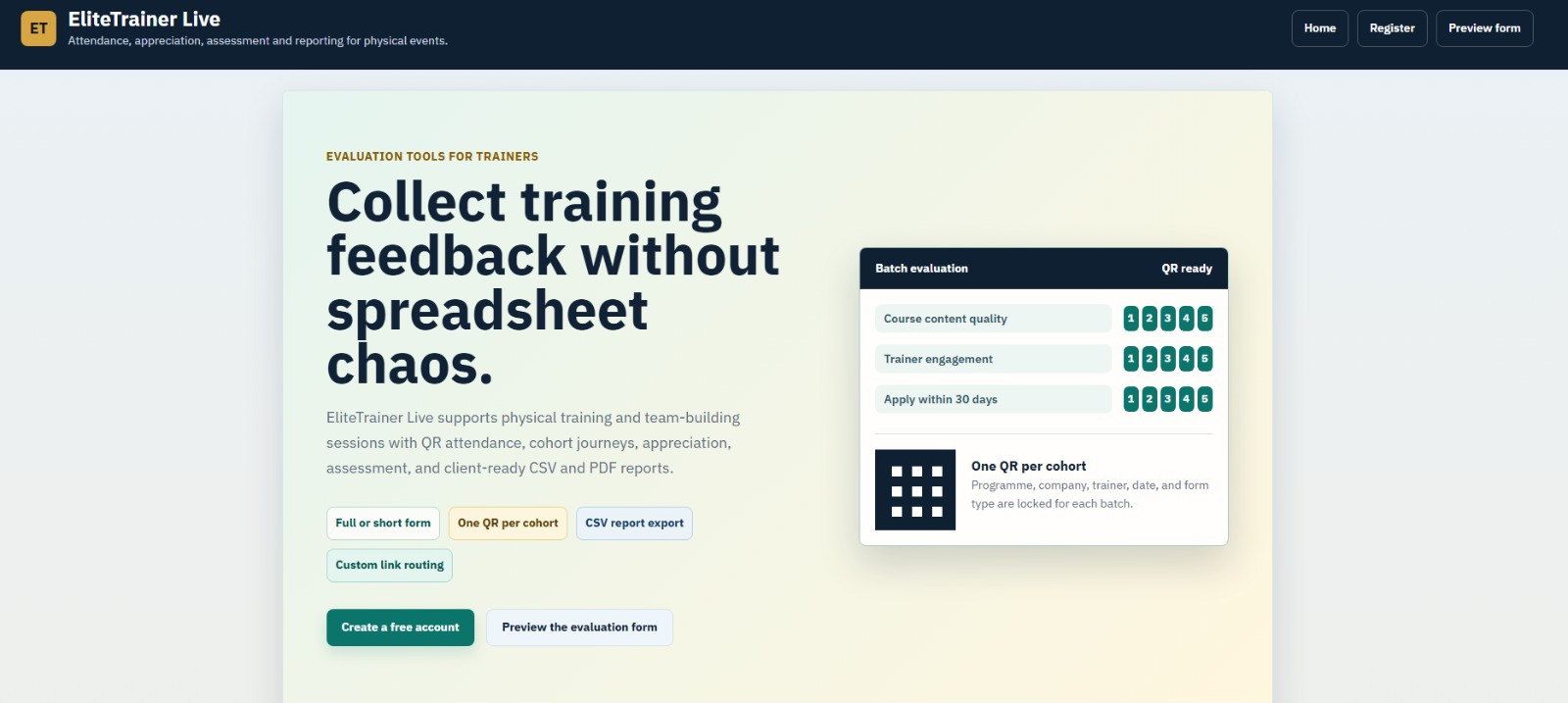
What we build: attendance records, assessment forms, feedback reports and follow-up reminders based on your approved measures. CIPD’s learning evaluation guidance covers evaluation, impact and transfer.
How should a training provider handle participant records and client reports?
Ask what personal information is collected, why it is needed, who can access it, where it is stored and how long it is retained. Agree how reports are shared, how records are corrected or removed and which third-party systems receive data. Request written responsibilities before uploading participant information.
What we build: agreed user roles, forms, record access and reporting workflows. Data handling, retention and integrations are defined in the project scope.
For trainer–providers: make your own expertise and programmes easy to assess. For training agencies: connect each programme with the proposed trainer, approved quote and delivery owner. Discuss the website and systems your buyers need.